
The performance of submersible pumping systems is determined by the interaction and mutual influence of the components included in the system, as well as by operating conditions. Therefore, the disadvantages of induction submersible motors used in these systems reduce the efficiency of the overall “well-system-reservoir” operation.
Permanent magnet drives for ESP and PCP systems represent a fundamentally different type of drive compared to traditional induction motors. Their application in ESP and PCP systems makes it possible to create new-generation installations with improved energy efficiency, operational capabilities, and service life characteristics.
Disadvantages of ESP Systems with Induction Motors
Relatively Low Efficiency and Limited System Lifetime
Relatively low efficiency values (83.5–84.5%) and high operating and starting currents (Istart > 5 Irated) result in increased power consumption and motor overheating (ΔT = 40–45oC), which reduces system lifetime and limits operation:
- At low pump flow rates.
- Under unstable inflow conditions.
- At elevated ambient temperatures.
- In certain technological operating modes.
- Using selected production technologies with economically acceptable performance.
- Without stopping the ESP system to cool the induction motor during well startup after workover operations.
Induction motor speed control is performed using a control station equipped with a Variable Frequency Drive (VFD), which requires the installation of filters that reduce the overall energy efficiency of the drive system.
Insufficient Speed Control Range
The limited speed control range while maintaining stable torque does not allow induction motors to be effectively used in PCP systems, where rotational speed control down to 700 rpm is required.
Advantages of ESP and PCP Systems with Permanent Magnet Motors
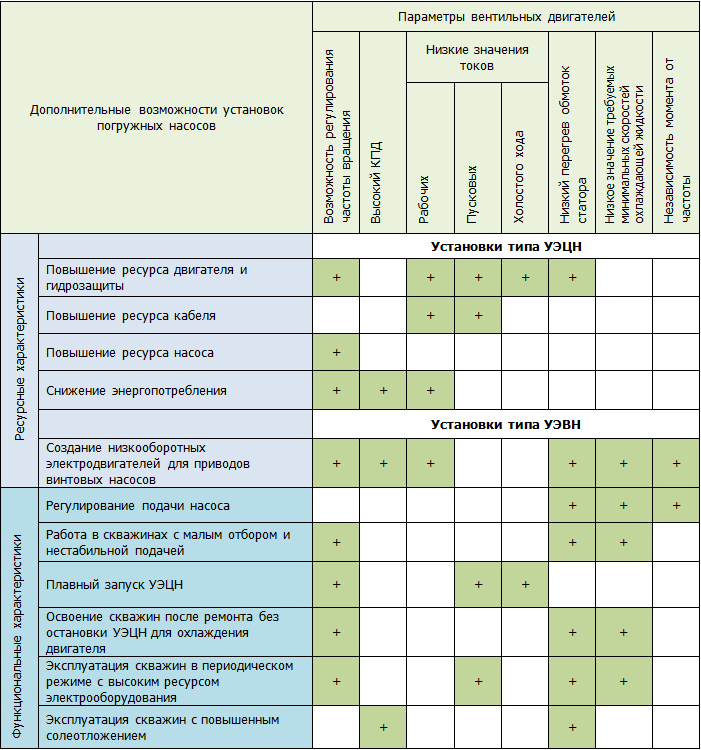
Reduced Energy Consumption
Energy savings are achieved due to:
- Higher efficiency values (91–92%).
- Lower operating currents, reducing power losses in the cable line.
- Wide-range speed control with constant torque.
- Specialized control technology.
Extended System Lifetime
System lifetime is increased due to:
- Lower motor overheating levels (ΔT = 20–25oC) and reduced operating currents.
- Lower operating temperatures of elastomer components in the motor and protector.
- Elimination of high inrush starting currents (which also increases cable lifetime).
- Extended pump lifetime achieved by changing the pump flow control principle: instead of throttling, flow is regulated by changing rotational speed.
- The ability of PCP systems to operate at low rotational speeds while maintaining stable high torque.
Optimization of Production Flow Rate
Production optimization is achieved through:
- Rotational speed control.
- The possibility of operating ESP systems in cyclic mode.